
During intense coastal storm seasons in Camden County, local homeowners frequently ask, “What is an underground drainage system in Kingsland, GA?” and how it prevents water from pooling around foundations.
An underground drainage network is a subterranean piping system that captures roof runoff from downspouts and routes it safely away from home footings. By moving high-volume stormwater beneath lawn surfaces to designated release points, these systems protect concrete slabs, prevent soil washouts, and keep landscaping intact.
Key Takeaways
- Sub-Surface Water Routing: Directs gutter runoff into buried smooth-wall pipes, discharging water far away from structural footings.
- Foundation Protection: Stops hydrostatic pressure buildup around concrete slabs, preventing settling and moisture intrusion.
- Erosion & Mold Control: Prevents standing puddles, topsoil loss, and damp conditions that attract pests or foster mold growth.
- Long-Term Durability: Utilizes solid schedule PVC piping rather than thin corrugated tubing to prevent pipe collapse and root clogs.

How Does Sub-Surface Water Routing Protect Your Foundation?
An underground drainage system redirects heavy roof runoff away from your home through buried piping, preventing foundation settlement. By connecting downspouts directly to solid subterranean conduits, water travels safely past your foundation line and discharges at a designated low point or curb emitter. This protects concrete slabs from hydrostatic pressure and soil erosion during heavy downpours.
When evaluating residential properties, people often wonder, What is an underground drainage system in Kingsland, GA? when traditional surface splash blocks fail during summer cloudbursts. Surface runoff that sits near foundation walls saturates the area’s sandy coastal soils, increasing erosion, undermining foundations, and creating damp crawl spaces.
Preventing Structural Damage from Heavy Storms
- Eliminating Soil Saturation: Keeps water moving beyond footing boundaries, stabilizing the ground supporting your concrete pad.
- Reducing Hydrostatic Pressure: Relieves lateral water pressure against foundation walls to prevent subterranean seepage.
- Protecting Crawl Space Vents: Keeps high water lines from overtopping low vent openings during severe coastal weather.
Why Is Solid Smooth PVC Preferred Over Corrugated Pipe?
Solid smooth-wall PVC pipe outlasts flexible corrugated tubing by providing an unobstructed flow path that resists root intrusion and crushed lines. While corrugated pipe traps pine needles and collapses under light vehicle weight, rigid schedule 40 or thin-wall PVC maintains its structural shape and allows high-velocity water movement. This ensures long-term drainage without recurring clogs.
Understanding what an underground drainage system is in Kingsland, GA, gives property owners the clarity needed to choose rigid PVC pipe over thin corrugated tubing that clogs easily. Smooth interior walls keep water velocity high, flushing out sand and small debris naturally rather than allowing material to settle in pipe ridges.
How Do Pop-Up Emitters and Catch Basins Prevent Lawn Flooding?
Catch basins collect heavy debris at low points, while hydrostatic pop-up emitters safely discharge water into an approved drainage area away from the home’s foundation. Catch basins filter leaves and grit near downspout connections before water enters the buried line. When the rain stops, pop-up emitters spring shut to keep rodents, grass clippings, and yard dirt out of your discharge pipes.
Key Operational Benefits
- Debris Filtering: Sump baskets inside catch basins trap shingle grit and twigs before they travel down the line.
- Pest Exclusion: Spring-loaded terminal caps seal discharge outlets closed when water pressure drops.
- Seamless Lawn Integration: Flush-mounted emitters sit flat with the grass level, allowing lawnmowers to pass over safely.
The 4-Phase Underground Drainage Installation Process
Phase 1: Elevation Mapping and Line Pitching
- Survey ground slope using optical levels to establish a minimum downward gradient of one-eighth inch per foot.
- Mark underground utilities through local locate services before trenching near driveways or property lines.
- Plan discharge points to avoid shedding excess water onto neighboring parcels.
Phase 2: Trench Excavation and Bedding Preparation
Dig narrow utility trenches approximately eight to sixteen inches deep, adjusting depth as needed to maintain proper drainage slope.
Compact soil beds and lay down gravel or filter fabric to stabilize the pipe’s position.
Clear root mats and hard clay deposits to maintain consistent downward slope angles.
Phase 3: Solvent-Welded Pipe Installation and Catch Basin Tie-In
Glue rigid PVC connections using heavy-duty primer and solvent cement to prevent root intrusion.
Install inline catch basins beneath downspouts to capture leaf grit before it enters main runs.
Attach high-capacity cleanout ports at bend points for straightforward long-term jetting access.
Phase 4: Backfilling, Compacting, and Surface Emitter Testing
Fill trenches with native soil, tamping in lifts to prevent ground settling over buried lines.
Anchor pop-up relief valves at terminal outlets to allow automatic water release under pressure.
Flush the entire network with high-volume water to verify a rapid flow rate and leak-free joints.
Key Components of Coastal Drainage Performance
Foundation & Slab Protection
- Eliminates standing groundwater around concrete footings to stop hydrostatic pressure buildup.
- Prevents soil shifting and slab cracking caused by repetitive wet-and-dry expansion cycles.
- Directs roof volume away from crawl space vents to keep subfloor moisture levels low.
Hydraulic Flow & Pipe Dynamics
- Utilizes smooth interior walls that promote faster, more efficient water flow than corrugated pipe.
- Prevents stagnant water accumulation that breeds mosquitoes and damp odors near living spaces.
- Maintains self-cleaning velocity during tropical storms to flush out fine sand naturally.
Property Preservation & Yard Defense
- Stops topsoil washouts and exposed tree roots along landscape beds.
- Prevents lawn bogging near patios, walkways, and paved parking aprons.
- Enhances curb appeal by hiding downspout extensions beneath manicured turfgrass.
Essential Drainage Components and Terminology
- Schedule 40 PVC: Thick-walled plastic piping designed for long-term underground drainage applications and greater resistance to crushing than corrugated pipe.
- Catch Basin: A buried sump box with a surface grate designed to catch leaves and shingle grit before water enters closed pipes.
- Hydrostatic Pop-Up Emitter: A spring-loaded terminal valve that opens under water pressure to discharge rain and closes when flow stops.
- Slope Gradient: The minimum downward pitch required for gravity-fed drainage lines to keep water moving continuously toward discharge points.
- Cleanout Fitting: An accessible threaded pipe cap installed along long runs to allow rapid inspection and maintenance clearing.
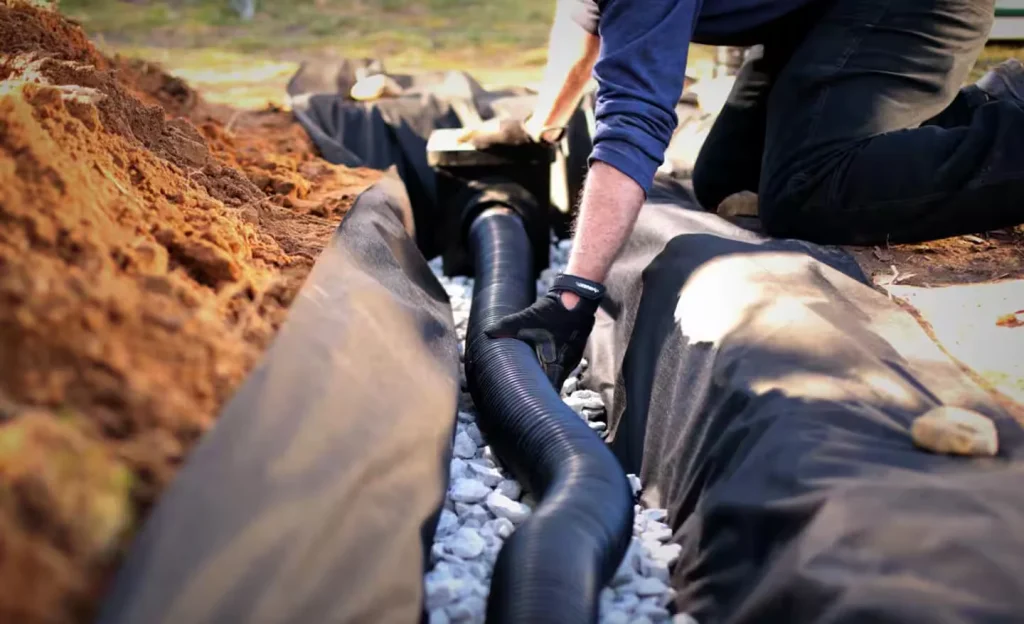
Field Notes from Our Kingsland Service Team
In coastal Georgia, high water tables and dense clay layers create unique drainage challenges. Standard splash blocks simply drop hundreds of gallons of water right next to concrete footings, leading to saturated soil and cracking slabs over time. Downspout extensions running across the grass get mowed over or tripped over by family members. Installing buried, glued PVC lines moves heavy roof runoff completely off your lawn and into safe discharge zones, keeping your yard dry during frequent summer downpours.
Protect Your Property with Gutter Solutions LLC
Managing heavy roof runoff in Southeast Georgia requires more than quick surface fixes that wash away your topsoil. At Gutter Solutions LLC, we design and install buried drainage networks built to handle high-volume rainfall without backing up. We are the home of the lifetime warranty.
We use heavy-duty double-ribbed gutter hangers screwed securely into the fascia board or rafter tails every 18 to 24 inches. This heavy-duty mounting ensures your gutter troughs remain firmly anchored to the fascia, efficiently directing every drop of water from your roof directly into your sub-surface discharge lines. By connecting seamless gutters to underground smooth-wall PVC piping, we eliminate standing water, protect your foundation slab, and prevent costly soil erosion around your driveway and flower beds.
If you’re still asking, “What is an underground drainage system in Kingsland, GA?” Our team is ready to help. or need your roof runoff piped safely away from your home, our team is ready to step in. Contact us today to secure your home. Call (912) 202-0537 or visit Gutter Solutions LLC to schedule your estimate today.
How Deep Should Underground Drainage Pipes Be Buried?
Underground drainage pipes are typically buried between eight and sixteen inches deep in residential yards. This depth protects lines from foot traffic and lawn mowers while maintaining proper slope toward the discharge outlet.
How Do You Keep Roots From Clogging Buried Downspout Lines?
Roots are kept out by using solid, rigid PVC pipe connected with solvent-welded glue joints rather than snap-lock corrugated fittings. Glued seams create a sealed barrier that tree and shrub roots cannot penetrate.
Will an Underground Drainage System Work In Flat Yards?
Yes, underground drainage systems function effectively in flat yards when installed with an engineered pitch or artificial slope inside the trench. Installers use optical leveling tools to guarantee a continuous downward fall to the exit emitter.
Where Does Water Go When It Reaches a Pop-up Emitter?
When water fills the subterranean pipe, the hydrostatic pressure lifts the pop-up emitter, discharging water onto lawn surfaces or curb gutters. Once water stops flowing, an internal spring automatically closes the lid.
How Often Do Buried Downspout Drains Need Maintenance?
Buried downspout drains require minimal maintenance when equipped with inline catch basins. Cleaning out catch basin grates once or twice a year removes trapped leaves and prevents main pipe blockages.