
Downpours in South Georgia do not mess around. One minute the sun is shining, and the next, your backyard looks like a swamp. We see this all the time at Gutter Solutions LLC. When the clay soil gets completely saturated, rainwater has nowhere to go but straight toward your foundation. Installing proper underground drainage in Waycross, GA, is the permanent way to route that heavy water away from your home and dry out your property.
What Are The Key Takeaways?
Getting water away from your foundation requires a permanent strategy. You have to catch the runoff before it causes structural damage.
- Immediate relief: Capturing water at the downspouts stops foundation flooding fast.
- Hidden protection: Buried pipes keep your yard looking clean while doing the heavy lifting out of sight.
- Gravity power: Properly sloped systems push moisture away from your footings without relying on electric pumps.
How Does Standing Water Actually Ruin A Property?
Pooling water does a lot more damage than just drowning your grass and breeding mosquitoes. When moisture sits against your concrete footing, it slowly eats away at the structural integrity. Wet soil expands rapidly. Then it shrinks when it dries out. This constant shifting causes your foundation to crack and settle under the house’s weight.
What Happens If You Just Leave The Puddles Alone?
Ignoring the puddles usually leads to expensive repairs down the road. Let’s look at the real issues caused by bad yard slope and poor water management around the perimeter of your house.
- Foundation Settlement: Wet soil loses its ability to support heavy concrete footings.
- Rotting Siding: Splashing water keeps lower exterior wall materials constantly damp.
- Dead Landscaping: Plant roots quite literally drown when trapped in stagnant water for days on end.
How Do Buried Lines Compare To Open Surface Trenches?
Moving runoff below the turf protects your grass while keeping the yard completely safe for foot traffic. Open ditches easily clog up with pine straw and oak leaves, forcing you to constantly dig them out with a shovel. You need a system that works automatically. That is exactly why installing durable underground drainage in Waycross, GA, beats a temporary weekend fix every single time.
What Is The Process For Drying Out Your Yard?
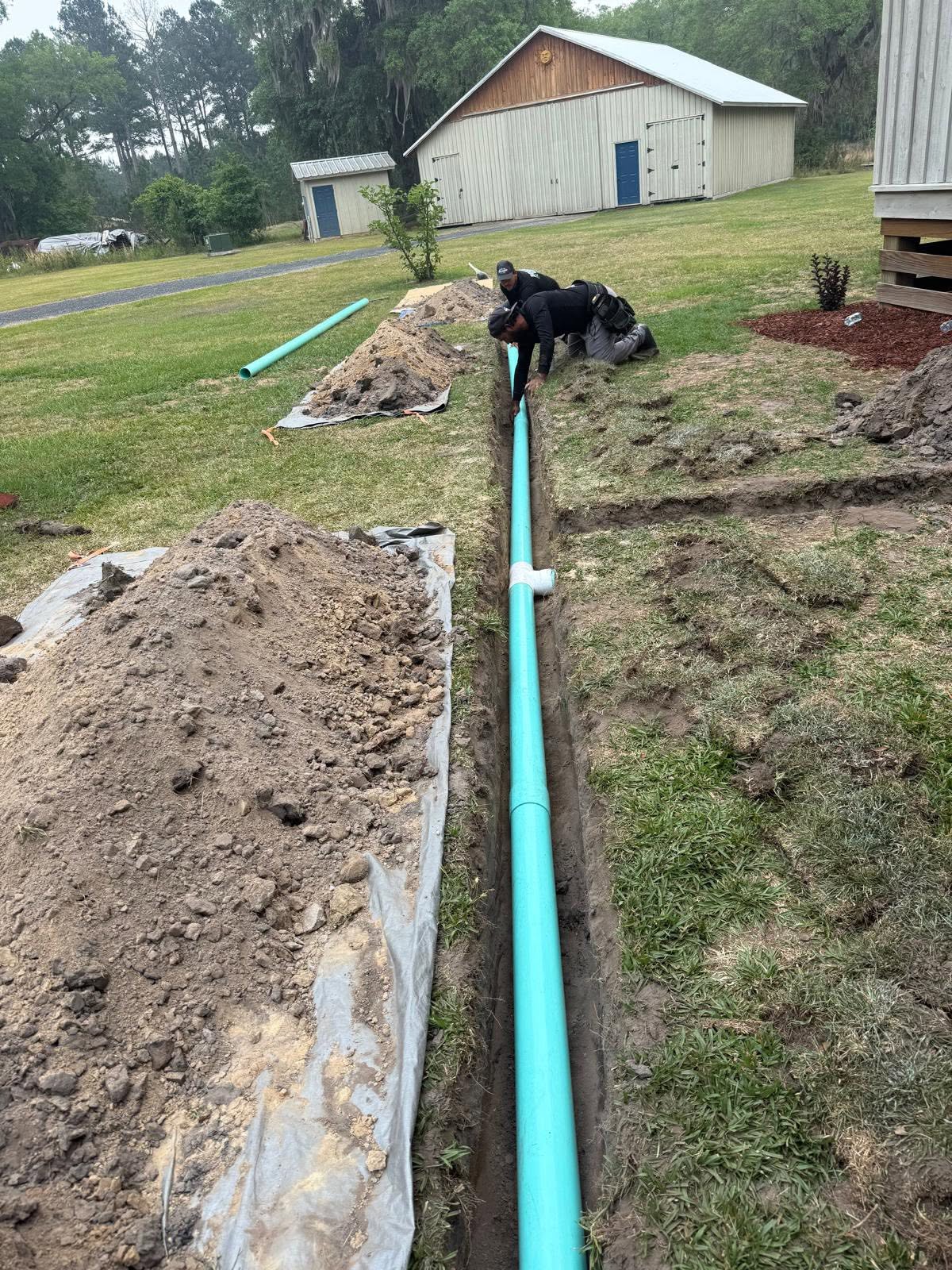
Fixing a soggy lawn requires a straightforward plan targeting the exact source of the problem. We never just dig holes in your grass and hope for the best. Instead, our crew maps out the natural slope. We ensure gravity pulls the excess runoff completely off your property. When we handle your underground drainage in Waycross, GA, we follow a specific sequence.
- Finding the lowest points: We locate exactly where your gutters dump too much water and map the yard’s natural dips.
- Trenching the correct path: Our team digs a precise trench angled perfectly so water flows downhill without getting stuck.
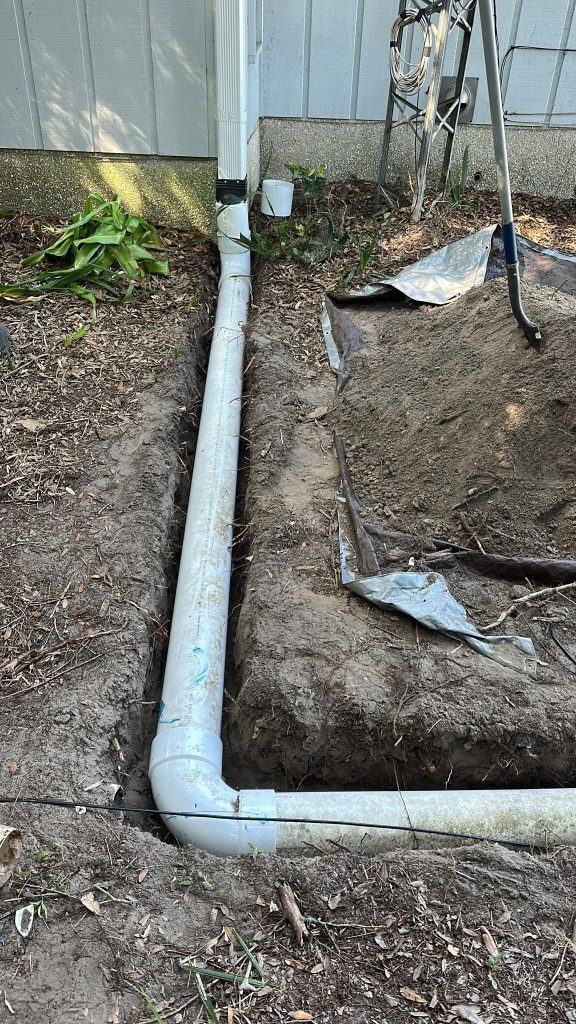
- Connecting solid pipes: We hook up durable, smooth-walled piping directly to your downspouts. This captures rainwater before it hits the ground.
- Covering the work area: We bury the pipes securely. We pack the dirt tightly and replace the sod, so your yard looks normal again.
Do not let your gutter runoff dump right onto your flowerbeds. People buy those short plastic extensions at the hardware store, thinking they solve the problem. It just moves the puddle three feet away. The water still sinks into the dirt right next to your foundation. You must capture that heavy flow in a solid, sealed pipe and push it at least ten feet out to keep your home safe.
Ready To Take Back Your Flooded Backyard?
Nobody wants to wait three days after a storm just to mow a squishy lawn. Properly routing that stagnant water out of your yard protects your foundation and gives you your property back. Stop dealing with seasonal flooding and mushy grass today. It is time to invest in reliable underground drainage in Waycross, GA. Call (912) 202-0537 for a professional inspection and to get the water flowing the right way.
How Deep Do The Pipes Need To Be Buried?
Most residential drain lines sit about twelve to eighteen inches below the grass surface. This depth protects the plastic pipes from getting crushed by heavy lawnmowers. It also ensures we maintain the necessary downward slope for gravity to do the heavy lifting.
Will The Installation Destroy My Entire Lawn?
We only dig exactly where the pipe needs to go, keeping the mess to an absolute minimum. Our crews carefully remove the top layer of grass, dig the narrow trench, and then replace the soil and sod once the pipe is secure.
Can Tree Roots Clog Up The Buried Lines?
Using solid, smooth-walled PVC piping drastically lowers the chance of tree roots breaking in. Older perforated pipes let roots seek out the moisture inside. A sealed line carries the water straight through without giving roots any access points.
Do I Need To Clean Out A Buried System?
A well-designed system requires very little maintenance as long as your roof gutters stay clear. If gutter guards block leaves from entering the downspouts, your underground pipes will stay clean and flow freely for years.
Where Does The Captured Water Actually Go?
We route the water to a safe discharge point where it won’t damage your home or your neighbors. Depending on your property layout, this usually means directing the flow to the street curb, a storm drain, or a natural slope far behind the house.