
When torrential coastal storms sweep through Chatham County, most homeowners look straight up at their shingles. But your primary shield against structural water damage sits right under the eaves. Understanding how soffit and fascia protect a home in Savannah, GA, means looking at how intake ventilation and exterior trim shield your roof structure from intense atmospheric moisture and high winds.
Key Takeaways
- Blocks Pest Entry: Seals open rafter gaps to stop squirrels, raccoons, and wasps from nesting inside warm attic insulation.
- Drives Attic Ventilation: Perforated soffit panels draw cooler outside air through eaves to flush out trapped humidity and heat.
- Anchors Gutter Systems: Solid fascia boards provide the rigid vertical mounting surface needed to anchor rain gutters securely.
- Prevents Sub-Fascia Rot: Channels roof runoff safely into gutters, preventing water from wicking into the sub-fascia, rafter tails, and surrounding roof framing.
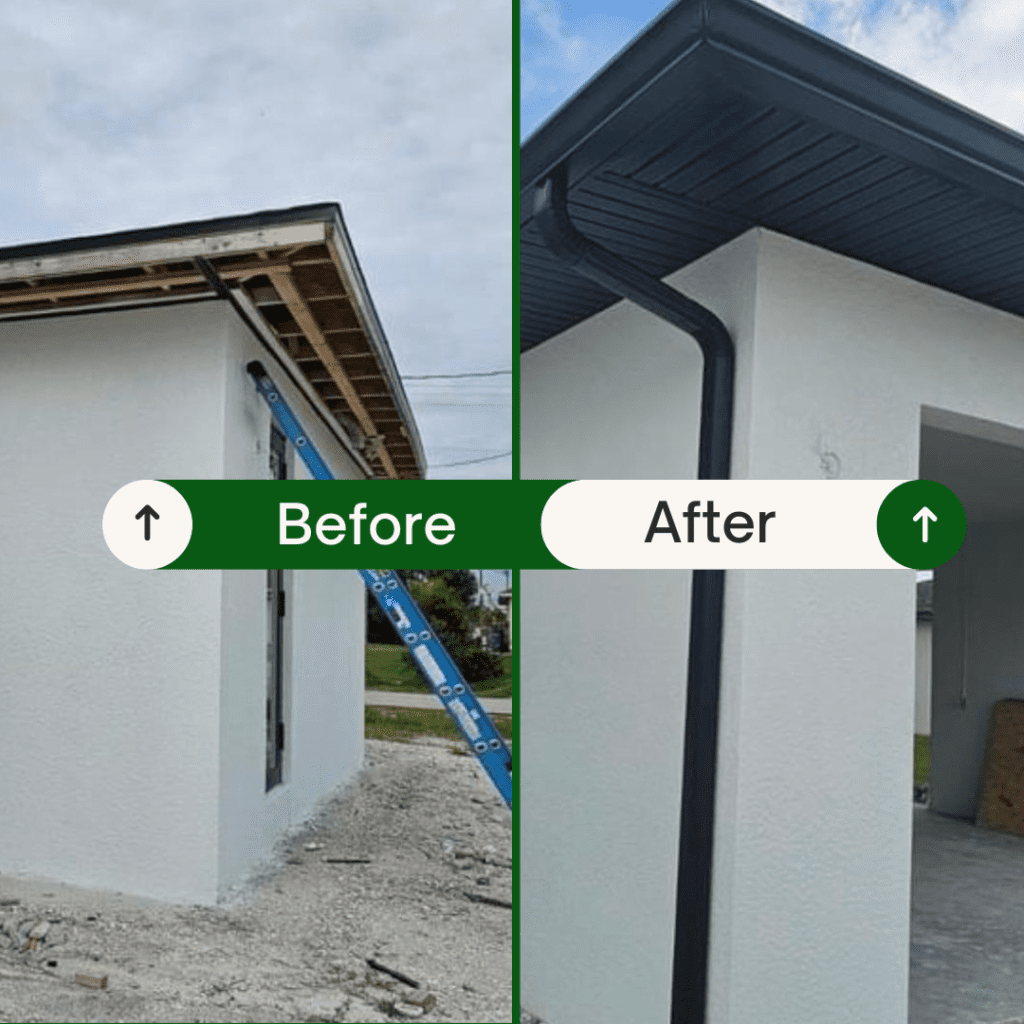
How Do Soffit and Fascia Work Together to Guard Your Eaves?
Soffit panels seal the underside of overhangs while fascia boards create a vertical barrier along rafter ends. This structural combination prevents blowing rain from entering your roof cavity and provides rain gutters with a solid mounting base. Without a fully functional eave system, coastal moisture rapidly destroys vulnerable roof decking and interior framing. When evaluating how soffit and fascia protect a home in Savannah, GA, contractors look closely at roof intake airflow and the structural integrity of the wood.
Why Is Attic Ventilation Critical in Our Humid Climate?
Perforated soffit intake vents continuously draw outside air into your attic space to drop interior heat. In coastal Georgia, trapped humidity and heat can cause attic temperatures to rise significantly, increasing the risk of warped roof decking and mold growth. Proper soffit airflow balances temperature extremes, protecting shingles from premature thermal breakdown while lowering cooling loads.
The Strategic Framework: 3 Phases of Eave Protection
Add Your Heading Text Here
Air Intake Balancing
- Install continuous perforated soffit panels along every roof eave to establish adequate net free vent area.
- Remove attic insulation from internal rafter bays, using baffles to ensure uninterrupted airflow into the attic.
- Lower ambient attic temperatures to stop thermal heat transfer through the interior ceiling drywall.
Structural Gutter Mounting
- Mount rot-resistant fascia trim directly to sound sub-fascia framing using heavy-gauge exterior fasteners.
- Align metal drip edge flashing over the top lip of the fascia board so water spills cleanly into gutter troughs.
- Reinforce mounting zones to support high-volume runoff during heavy summer thunderheads.
Moisture Barrier Sealing
- Seal all corner joints and seams with exterior-grade sealant to block wind-driven rain penetration.
- Integrate protective aluminum or vinyl cladding to isolate the underlying timber from high humidity and salt air exposure.
- Prevent sub-surface moisture wicking that destroys expensive roof decking near edge courses.
Why Healthy Fascia and Soffits Matter
Moisture & Rot Prevention
- Sub-Fascia Decay: Unprotected timber absorbs blowing rain, turning structural wood soft and causing gutter spikes to pull out over time.
- Mold Mitigation: Trapped humidity under eave boards creates dark, wet conditions where wood-destroying fungi thrive unchecked.
- Drip Edge Integration: Metal flashing channels water directly into gutter systems rather than allowing it to run down fascia faces.
Airflow & Ventilation Mechanics
- Continuous Soffit Venting: Uniform perforations provide balanced intake air needed to push hot, moist attic air out through ridge vents.
- Thermal Regulation: Lower attic heat reduces summer air conditioning demand and preserves shingle integrity over time.
- Condensation Control: Active circulation stops interior moisture from dripping onto ceiling insulation during humid nights.
Structural Resilience
- Gutter Load Support: Solid fascia boards transfer the weight of water-filled gutters into the sub-fascia and rafter tails, helping support the gutter system during heavy rainfall.
- Storm Wind Resistance: Tight eave construction helps reduce wind intrusion beneath roof overhangs and supports the overall wind resistance of the roofing system during severe storms.
- Pest Blocking: Sealed edges block raccoons, birds, and carpenter bees from damaging structural framing.
Simple Guide to Roof Eave Parts
- Soffit Board: The exposed horizontal under-surface of a roof overhang that encloses rafter tails and provides ventilation.
- Fascia Board: The forward-facing vertical trim board installed along the roof edge that covers the rafter tails and provides a secure mounting surface for the gutter system.
- Drip Edge: L-shaped metal flashing installed along roof perimeters to direct water runoff away from the fascia and directly into gutter channels.
- Sub-Fascia: The structural rough timber nailed across rafter ends that acts as the core load-bearing anchor for exterior fascia trim.
- Net Free Vent Area: The open, unobstructed physical space within a soffit vent that allows active air intake into an attic cavity.
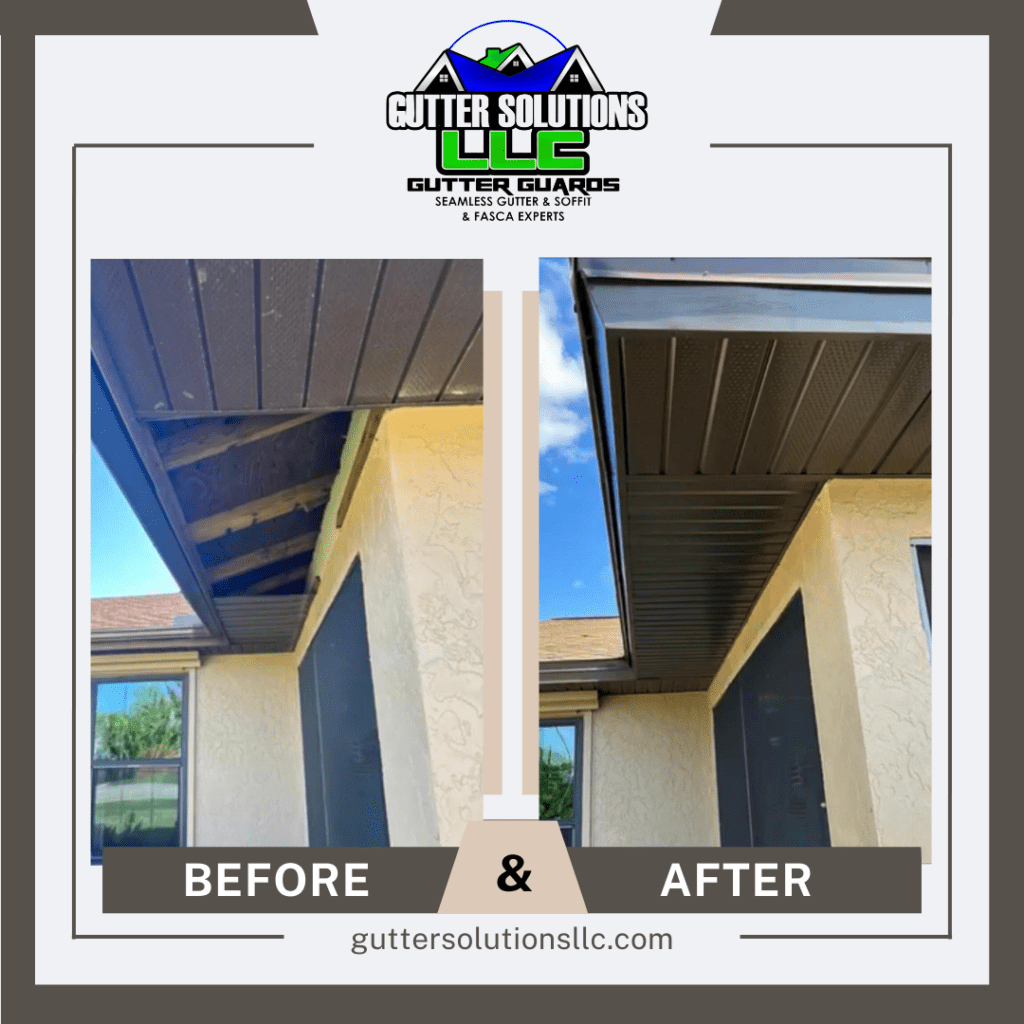
What We See During Local Roof Inspections
When our crews tear off failing gutters, we repeatedly find hidden sub-fascia rot caused by clogged gutters or missing drip edges. Homeowners often ask us: How do soffit and fascia protect a home in Savannah, GA? The real-world answer becomes clear once you see rotting timber behind cosmetic aluminum wraps. Water backs up under shingle edges, soaks the underlying sub-fascia, and eventually rots the rafter tails. Replacing these structural framing members is costly, whereas keeping your fascia solid and fully protected with proper gutter anchoring prevents water damage before it reaches your structural framing.
Take the Next Step Toward Complete Home Protection
Maintaining durable eave protection stops water damage, preserves structural roof framing, and keeps interior attic spaces dry year-round. Investing in high-performance trim materials and engineered gutter supports prevents costly wood repairs down the road.
If your home shows signs of sagging gutters, peeling paint, or damaged eaves, contact Gutter Solutions LLC today. Asking yourself How do soffit and fascia protect a home in Savannah, GA? is the first step toward safeguarding your property against heavy rain and humidity. We are the home of the lifetime warranty. We use heavy-duty double-ribbed gutter hangers installed every 18 to 24 inches and securely fastened into the structural framing behind the fascia to help keep your gutter system firmly in place through every storm. Our experienced crew delivers tailored eave repairs and installations designed specifically to withstand severe weather, high humidity, and salt air exposure. Protect your investment with custom-fit eave solutions built for coastal weather. Call (912) 202-0537 now to schedule your comprehensive on-site eave evaluation.
How do you know if your soffit or fascia is rotting?
Lorem ipsum dolor sit amet, consectetur adipiscing elit. Ut elit tellus, luctus nec ullamcorper mattis, pulvinar dapibus leo.
Can you replace fascia without removing the gutters?
No, rain gutters mount directly to the fascia board and must be uninstalled to replace the damaged timber underneath properly. Attempting to swap fascia boards while gutters remain attached prevents correct sealing and risks twisting or damaging your rain channels.
What is the best material for soffit and fascia near coastal water?
Heavy-gauge aluminum and high-grade vinyl perform best in coastal environments because they do not rot, warp, or rust when exposed to salt air and high humidity. These materials require virtually no maintenance while providing long-term protection for solid wood sub-framing.
How does soffit venting lower home energy costs during summer?
Soffit intake vents allow cooler outdoor air to continuously replace the rising hot air trapped in your attic cavity. By preventing attic temperatures from exceeding extreme levels, your air conditioning system does not have to work as hard to cool the living spaces below.
Why are heavy-duty hangers necessary for mounting gutters to fascia?
Standard spikes pull out over time as wet wood expands and contracts under heavy rain loads. Double-ribbed hangers fastened securely into the fascia, sub-fascia, or structural framing provide stronger support for heavy gutter loads and help prevent sagging during severe storms.
Lorem ipsum dolor sit amet, consectetur adipiscing elit. Ut elit tellus, luctus nec ullamcorper mattis, pulvinar dapibus leo.